
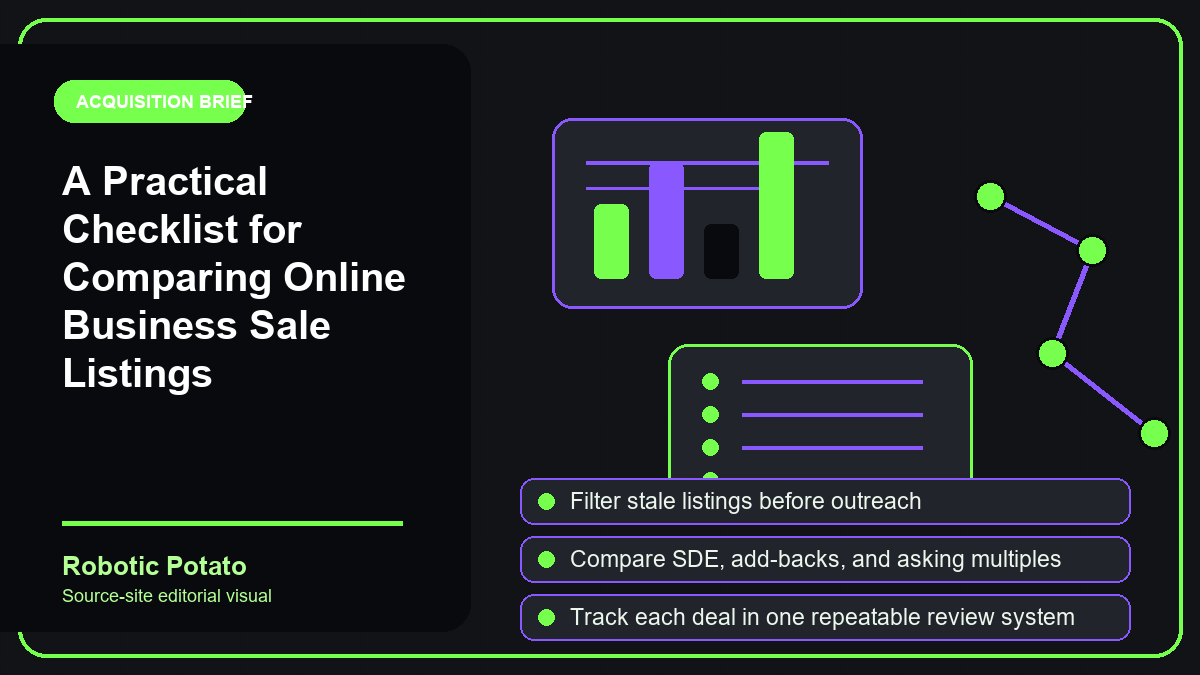
Navigating online listing platforms requires a structured approach to separate high-quality prospects from costly distractions. When you want to find local businesses for sale, it helps to establish a consistent filtering methodology to verify seller claims and analyze financial statements. The rise of digital marketplaces has made finding acquisition opportunities easier, but it has also increased the volume of unverified or overpriced listings. A buyer who does not use a rigorous screening checklist can easily waste weeks reviewing poor-quality deals. To improve search efficiency, buyers should learn how to filter data, confirm source quality, and spot warning signs early.
Verifying Source Quality and Listing Platforms
Online listing sites vary widely in their vetting processes. Understanding where a listing originates is the first step in assessing its credibility.
– Broker-Represented Listings: Listings represented by established business brokerages are generally more reliable. Professional brokers assist sellers in preparing accurate financial packages, including tax returns and detailed profit and loss statements.
– Owner-Listed Deals (FSBO): For-sale-by-owner listings often require extra scrutiny. While you may find a bargain, these listings frequently feature unrealistic valuation expectations and incomplete financial records, which slows down the diligence process.
– Listing Age and Stale Data: Check the date the listing was posted. Listings that have been active for more than six to nine months without going under contract often have underlying issues, such as unrealistic price expectations, pending legal disputes, or declining revenues.
To evaluate source platforms effectively, buyers should check the registration history and general site structure. For instance, tech-minded buyers can utilize resources from our guide on selecting a practical chatbot app to understand how web platforms store, retrieve, and display data inputs safely.
Screening Financial Metrics and Valuation Multiples
A preliminary review should focus on key financial benchmarks to determine if a listing warrants deeper investigation.
– Revenue and Earnings Trends: Look for consistent financial performance. A sudden spike in revenue right before the business is listed for sale is a red flag that requires close examination to ensure it is not a temporary bump from a single project or unsustainable promotion.
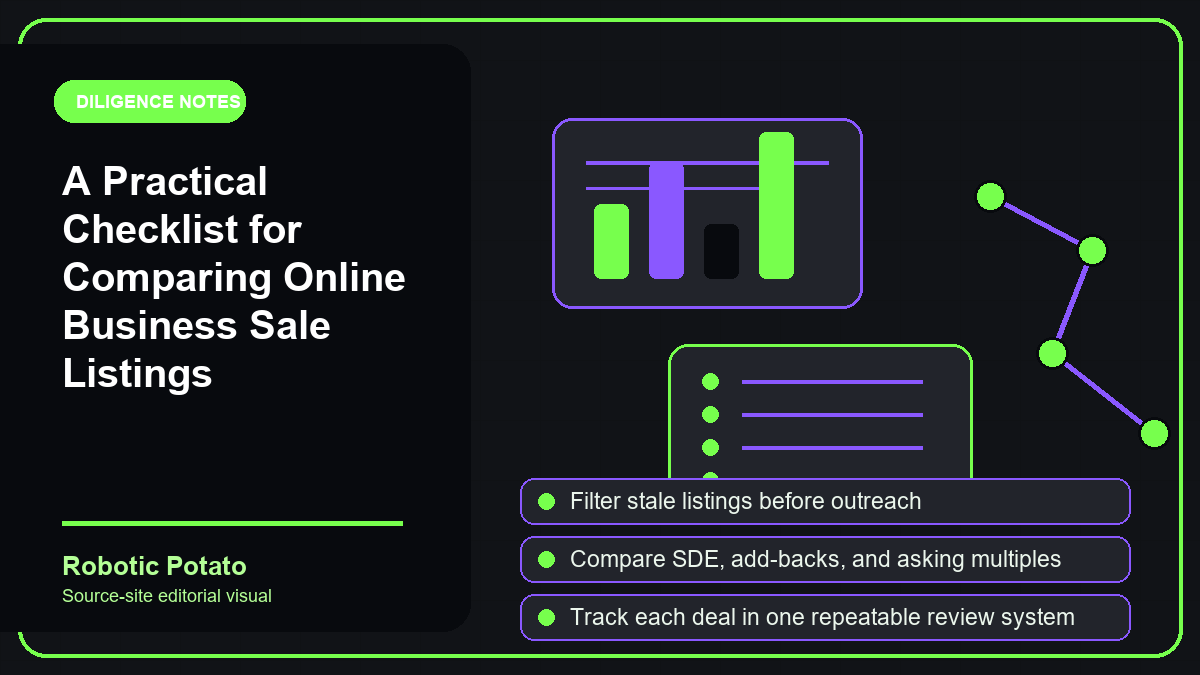
– SDE and EBITDA: Verify how the seller calculated their Seller’s Discretionary Earnings (SDE). SDE represents the total cash flow generated by the business for a single owner-operator. When reviewing these figures, analyze the seller’s add-backs with a qualified advisor. Add-backs are expenses added back to net income, such as personal travel, vehicle leases, or non-recurring legal fees. Buyers should look for add-backs that are legitimate, documented, and non-operational.
– Valuation Multiples: Compare the listing’s asking price multiple to industry averages. If a service business is listed at a premium to common market ranges, the seller should be able to support that premium with documented strengths such as proprietary technology, recurring revenue, strong margins, or brand equity.
Assessing Operational Risks and Competitive Moats
Once the financials are reviewed, evaluate the operational foundation of the business to understand its long-term viability.
– Customer Concentration: Analyze the customer base to ensure no single client accounts for more than ten percent of total revenues. If a major client leaves post-sale, it can wipe out your profitability and threaten the business’s survival.
– Proprietary Technology and Assets: Does the business own unique assets, such as patents, proprietary software, or exclusive distribution agreements? A strong competitive moat protects your margins from being undercut by new market entrants.
– Systemization and Standard Operating Procedures (SOPs): A well-run business should have documented processes for all core operations. If the daily workflows are stored only in the owner’s head, the business will struggle during the transition period.
To keep up with the latest tools and strategies for digital acquisition, you can regularly review updates on our technology and innovation blog to stay informed of industry trends.
Creating a Listing Comparison Spreadsheet
To compare multiple opportunities objectively, you should build a matrix that tracks key metrics across all prospective acquisitions.
1. Basic Listing Details: Record the listing ID, broker name, asking price, and location.
2. Financial Highlights: Track gross revenue, SDE, inventory value, and SDE multiple.
3. Operational Ratings: Grade customer concentration, owner involvement, and equipment quality on a scale of one to five.
4. Transition Terms: Note if the seller is offering owner financing, training support, or a non-compete agreement.
Separating Real Deals from Distractions
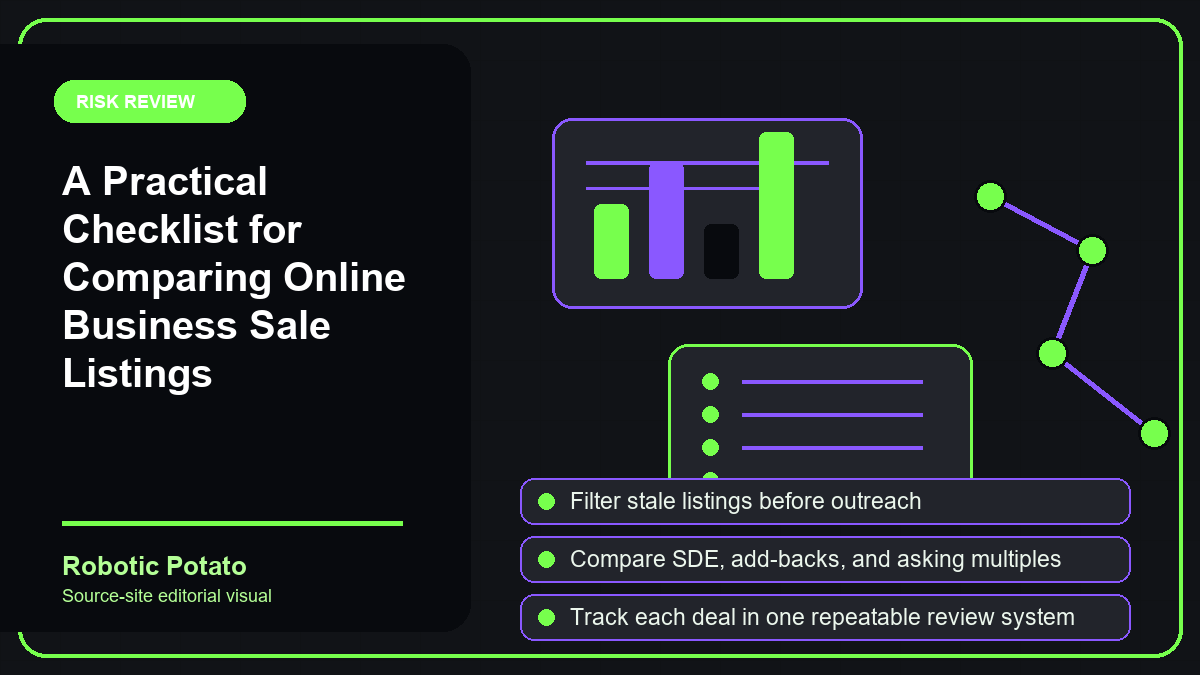
As you review opportunities, it is helpful to look at how professional buyers analyze listings. Understanding how an active marketplace operates, a process Midwest Business Brokers breaks down for buyers, can teach you how to filter out poor listings and focus your energy on transactions that have a high probability of closing. Serious buyers look for clear deal structures, motivated sellers, and verifiable financial records.
Structuring the Initial Outreach
When you identify a listing that meets your criteria, your initial contact should project professionalism and financial readiness.
– Submit a Professional Buyer Profile: Provide a brief summary of your business background, financial capabilities, and acquisition goals. This builds trust and shows brokers that you are a serious buyer.
– Prepare a Signed Non-Disclosure Agreement (NDA): Brokers will not release sensitive financial packages without a signed NDA. Return these documents quickly to avoid delays in receiving the Confidential Information Memorandum (CIM).
– Request a Structured Seller Call: Prepare a focused agenda for your first call with the owner. Your goal should be to understand their motivation for selling, their daily role in the business, and their willingness to assist during a transition period. By following a structured screening checklist, you can protect your capital and find an acquisition opportunity that fits your strategic goals.




0 Comments